Trading, A Simple Yet Effective Approach to Market Success
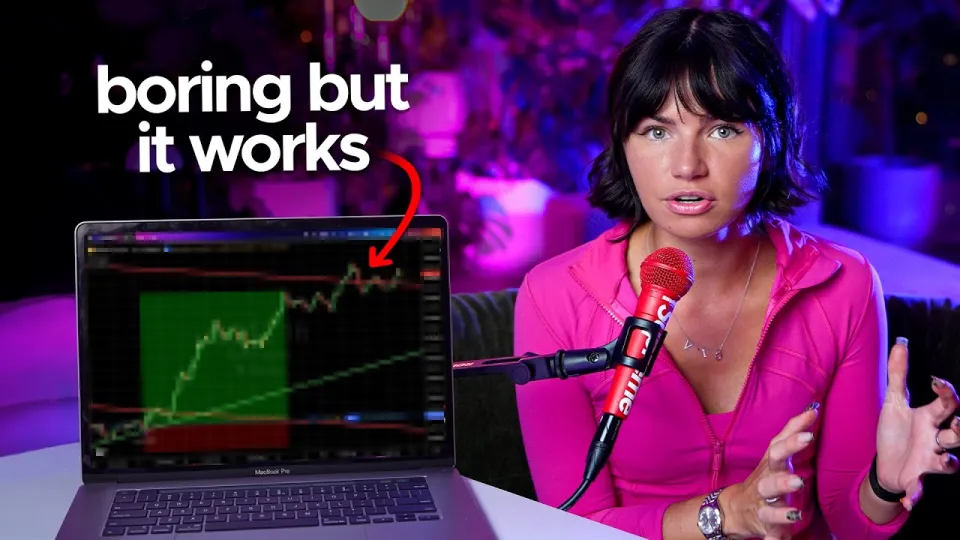
Video: Unfortunately, trading really is this simple
You can order the same kind of articles for your own video to boost it on YouTube and Google. Just message the Telegram bot @sat_sit_bot. Articles with your video embedded are written and posted by the bot itself — on popular topical sites (no ads). Your first 50 articles are free.
· based on the channel Tori Trades
Trading is often perceived as complex, but a straightforward and disciplined approach can lead to consistent success. The strategy shared by Tori Trades emphasizes simplicity, focusing on futures markets and the use of trendlines to guide entries and exits. Anyone interested in trading can apply this method without needing advanced financial education or mathematics skills. For exclusive bonuses and registration to Tori's trading resources, visit Tori Trades Waitlist.
Understanding the Basics of Trading
Trading involves buying and selling financial instruments such as futures, stocks, or forex with the goal of profiting from price movements. The futures market, in particular, allows traders to speculate on the price of commodities, indices, or currencies at a future date. Unlike stock trading, futures trading often involves leverage, which magnifies both gains and losses. This requires disciplined risk management.
The core of many successful strategies, including the one presented by Tori Trades, is the use of trendlines. Trendlines are straight lines drawn on price charts that connect significant highs or lows. They help identify the direction and strength of a trend, which is crucial for timing entries and exits.
Building a Simple Trading System with Trendlines
The trading system is built step-by-step as follows:
- Identify a clear trend on the futures chart by drawing trendlines along support (uptrend) or resistance (downtrend) points.
- Wait for the price to approach the trendline and look for confirmation signals such as bounce or break.
- Enter the trade when the price respects the trendline, indicating continuation, or breaks it convincingly, signaling a trend reversal.
- Set stop losses just beyond the trendline to minimize losses if the market moves against the position.
- Plan your exit either when the price reaches a predetermined target or shows signs of trend exhaustion, like a "bend at the end" of the trend.
Trendlines combined with liquidity concepts enhance entry and exit precision, although additional experience is necessary to master these nuances.
Managing Risk and Volatility in Futures Trading
Futures markets, particularly commodities like gold, can be highly volatile. Prices may shift abruptly—in seconds—leading to rapid gains or losses. Effective risk management is vital:
- Always use stop losses to protect your capital.
- Position size appropriately; trading two contracts can amplify risk.
- Be ready to exit quickly if the market turns unexpectedly.
This approach helps prevent large drawdowns and preserves trading capital for future opportunities.
Common Questions and Challenges in Trading
Many traders ask where to place stop losses relative to trendlines. The general guidance is to set stops just beyond the recent swing high or low near the trendline to avoid getting stopped out by normal price noise.
Another frequent concern is how this futures trading method compares to stock trading. Stocks can be influenced heavily by algorithms and may behave differently than futures, which often follow more clearly defined supply and demand levels.
Some traders wonder about taking multiple entries if the price forms a green candle and moves up near the exit. Such decisions require strict adherence to your trading rules to avoid overtrading.
Useful Tools for Traders
To track and analyze trades effectively, platforms like TradeZella offer detailed performance metrics and journaling capabilities. TradingView is a popular charting tool that allows traders to practice the system by drawing trendlines and testing entries and exits in real time.
Using reliable brokers like TradeStation can also improve execution and provide better market access.
Useful Links
- Join the waitlist for Tori Trades resources and bonuses: https://go.toritradez.com/waitlist-1009
- Track your trades like Tori with TradeZella: https://www.tradezella.com/?via=victoria
- Broker used by Tori Trades: https://www.tradestation.com/promo/toritrades/
Conclusion
Trading does not have to be complicated to be effective. By focusing on simple tools like trendlines and disciplined risk management, traders can navigate futures markets with confidence. The system demonstrated by Tori Trades shows that success comes from consistency, clarity, and careful trade tracking. Explore the resources at Tori Trades Waitlist to deepen your understanding and start applying these principles to your own trading journey.
Key takeaways
- Trading futures does not require advanced math or economics degrees.
- Trendlines are a core element of the trading strategy presented by Tori Trades.
- Managing risk with stop losses near trendlines is essential in volatile markets.
- Real trade tracking tools like TradeZella help monitor performance effectively.
- TradingView can be used to test and practice the trading system step-by-step.
Questions & answers
Do I need advanced math or finance degrees to trade futures effectively?
No, trading futures with a simple system based on trendlines does not require advanced math skills or formal finance education. Consistency and risk management are more important.
Where should I place stop losses when trading with trendlines?
Stops are typically placed just beyond recent swing highs or lows near the trendline to protect against normal price fluctuations while minimizing risk.
How does futures trading differ from stock trading in terms of market behavior?
Futures markets often have clearer supply and demand dynamics and may be less influenced by algorithmic trading compared to stocks, which can affect price movements differently.
What tools can help me track and improve my trading performance?
Platforms like TradeZella provide trade journaling and performance tracking, while TradingView offers charting tools to practice and test trading strategies effectively.
Source: Unfortunately, trading really is this simple · Markdown version