Bitcoin weekly close versus a deeper flush as the better setup for the crypto bull run
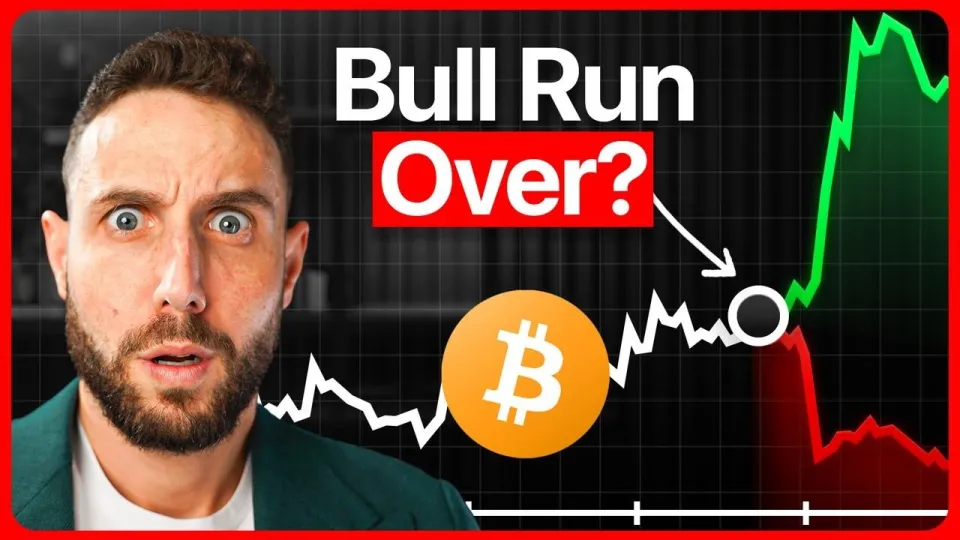
Video: Bitcoin Has 2 DAYS to Save the Crypto Bull Run
You can order the same kind of articles for your own video to boost it on YouTube and Google. Just message the Telegram bot @sat_sit_bot. Articles with your video embedded are written and posted by the bot itself — on popular topical sites (no ads). Your first 50 articles are free.
· based on the channel EllioTrades
Bitcoin is at a binary decision point: either the weekly candle closes above support and the crypto bull run continues, or it closes below and the market flushes toward lower levels before any recovery. The better trade is not to guess the direction but to pre-commit to both outcomes — hold core BTC, buy altcoins only on a confirmed hold, and keep dry powder for a flush. The setup is being tracked in public by EllioTrades, and traders who want to express a view on the outcome can do so through Kalshi's crypto and macro markets, where event contracts let you position on a specific result rather than a single directional bet.
Why the Bitcoin weekly close matters more than any daily candle
A weekly close is the only price print that all timeframes agree on, which is why it carries more weight than intraday wicks. Daily candles inside a range are noise: market makers can push price through a level during low-liquidity weekend hours, and that move often reverses by Monday. A weekly close above support, by contrast, forces swing traders, trend followers and systematic funds using weekly signals to treat the level as valid.
The practical consequence is that the last two days before a weekly close are usually the most violent. Positioning gets squeezed, stops sit just under obvious support, and liquidity thins out. That is exactly the window the market is in now: the bull case survives if buyers defend support into the close, and it fails if the candle prints below it. Watching the weekly close rather than a 4-hour chart is the difference between reacting to noise and reacting to structure.
The conditional trading plan for BTC and altcoins
The plan is a set of if-then rules, not a prediction. It works because each branch has a defined trigger and a defined action, so no decision has to be made in the middle of a candle.
- If BTC holds support into the weekly close, the bull structure stays intact and the priority shifts to altcoins that have held their own higher lows.
- If BTC closes below support, do not average down immediately; wait for a reclaim of the level or for a capitulation wick with volume, because a break often produces a second leg lower.
- Keep a fixed allocation to BTC as the core position regardless of the branch, since the asset that leads the recovery is almost always the one with the deepest liquidity.
- Size altcoin entries so that a further 20–30% drawdown in the alt basket does not force a sale at the bottom.
- Define invalidation before entry: a level, not a feeling, decides when the trade is wrong.
The most common mistake in this kind of setup is treating a support test as a buy signal by itself. Support is only a signal once it is defended and confirmed by a close.
What a break below support would actually look like
A genuine breakdown is a process, not a single red candle. The sequence usually starts with a failed reclaim of the broken level, followed by lower highs on the 4-hour chart, then a sweep of the previous swing low. Bitcoin dominance typically rises during this phase, because capital leaves altcoins and parks in BTC or stablecoins.
That dominance shift is the part altcoin holders underestimate. When BTC dominance climbs, altcoins can fall in BTC terms even while BTC itself is flat, which produces the painful pattern of a portfolio bleeding during a sideways market. If dominance breaks higher alongside a weak BTC weekly close, the correct response is to reduce altcoin exposure rather than add to it, and to wait for dominance to stall before rebuilding.
A separate risk sits outside crypto price action: index providers reviewing digital asset treasury companies. A decision to exclude or de-list companies such as MSTR from major global indexes would remove a passive bid from the largest corporate BTC holder and hit crypto-linked equities first, with sentiment spilling into spot markets afterwards. That is a scheduled catalyst, not a chart pattern, and it deserves its own risk line.
Why a short bear market is not the bullish outcome it looks like
A brief flush feels attractive because it offers cheaper entries, but market history argues the opposite. Deep, long bear markets reset positioning and flush leverage, which is what gives the next bull leg its fuel. A shallow correction that resolves in weeks leaves leverage and unrealized supply in place, so the following rally tends to be weaker and more prone to sharp reversals.
This is why wishing for a major setback to buy cheaper is a trap. If BTC has to be bought at higher prices because the bull case is confirmed, that confirmation raises the probability of larger gains — a better trade-off than a cheap entry in a market whose trend has been invalidated. The realistic middle path is to keep a core position, add on confirmed strength, and reserve cash for a genuine capitulation rather than a routine dip.
Typical questions from traders watching this setup
Traders arriving at this market tend to ask the same handful of things, and the answers are mechanical rather than emotional.
- Is a weekend move real? Weekend liquidity is thin and market makers are less active, so a Saturday or Sunday push through support is weaker evidence than a Monday close. Wait for the weekly candle.
- Should I short altcoins here? Shorting a specific altcoin into a support test is a low-reward trade: the downside is capped by the level and the squeeze on a bounce is violent. Expressing a bearish view through BTC or index products is cleaner.
- What counts as a buying opportunity? A defined level that holds on a closing basis, not a percentage drop. A 20% fall that keeps structure intact is different from a 10% fall that breaks it.
- Is one red week enough to call the bull dead? No. Trend changes are confirmed by a failed reclaim and lower highs, not by a single retracement that turns sentiment from euphoric to bearish in a day.
Altcoins worth watching if support holds
Altcoin selection only matters after the BTC branch is resolved, because altcoins are leveraged beta on Bitcoin's direction. If support holds, the highest-quality candidates are the ones that held higher lows during the BTC test, kept their BTC-denominated pairs flat or rising, and have a clear catalyst in the coming weeks rather than a narrative from the last cycle.
Names that repeatedly surface in this discussion include NEAR, Zcash, Midnight and Telcoin, each with a different profile: NEAR as a layer-1 beta play, Zcash as a privacy narrative trade, Midnight as an early-stage privacy ecosystem bet, and Telcoin as a payments remittance story. None of them should be bought before the BTC weekly close confirms, and each needs its own invalidation level. Chasing an altcoin that is already up 30% on the day of the BTC confirmation is not the same trade as buying the ones that held structure during the test.
All links from the breakdown
- Kalshi — trade event contracts with a sign-up offer
- Liquid — trade with 10% off fees
- WEEX — deposit $100 and unlock up to $4,000 in bonuses
- fomo — follow the public trading journey
- EllioTrades on X
The bottom line on Bitcoin's two-day window
The next weekly close is the single most important print for the crypto market right now, because it converts an ambiguous range into a confirmed trend. Hold support and the bull run stays alive, with altcoins that held higher lows as the higher-beta expression; lose it and the correct move is patience, a BTC-heavy allocation and a plan for a deeper flush rather than hope. A shallow bear market would weaken the next bull leg, so the depth of any correction matters as much as its existence. The breakdown above comes from the EllioTrades video, and traders who want to position on the outcome before the candle prints can use Kalshi to trade the specific event instead of guessing direction on spot.
Key takeaways
- EllioTrades frames the Bitcoin weekly close as the trigger that decides whether the crypto bull run continues or the market flushes lower.
- The plan is conditional: buy altcoins if BTC support holds, stand aside or hedge if the weekly candle closes below it.
- Bitcoin dominance rising is the main bearish signal for altcoins, since capital rotates into BTC and leaves alts at lower lows.
- A short bear market historically produces a weaker next bull leg, which is why the depth of any flush matters.
- MSCI's decision on digital asset treasury companies such as MSTR is a separate catalyst that can hit crypto equities and sentiment.
Questions & answers
Does a single red weekly candle end the crypto bull run?
No. A trend change needs confirmation: a failed reclaim of the broken level, lower highs on the 4-hour chart and a sweep of the prior swing low. One retracement that flips sentiment from bullish to bearish in a day is a warning, not a verdict, and the weekly close is what turns it into evidence.
Why is a short bear market bad for the next bull run?
A quick correction leaves leverage and unrealized supply in place instead of resetting positioning. Long, deep bear markets flush weak hands and force deleveraging, which is what gives the following rally its fuel. A shallow flush tends to produce a weaker, more fragile bull leg.
Should I short an altcoin like NEAR into a support test?
Shorting a specific altcoin at support is a poor risk-reward: the level caps the downside while a bounce can squeeze shorts violently. If you want bearish exposure, expressing it through BTC or a broader index product is cleaner than picking a single altcoin.
What counts as a real buying opportunity if BTC drops?
A defined level that holds on a closing basis, not a fixed percentage drawdown. A 20% drop that keeps market structure intact is a different setup from a 10% drop that breaks it, so the level and the weekly close decide whether to buy, not the size of the red candle.
Source: Bitcoin Has 2 DAYS to Save the Crypto Bull Run · Markdown version