Meme coin trading, how to trade Solana memes with the fomo app
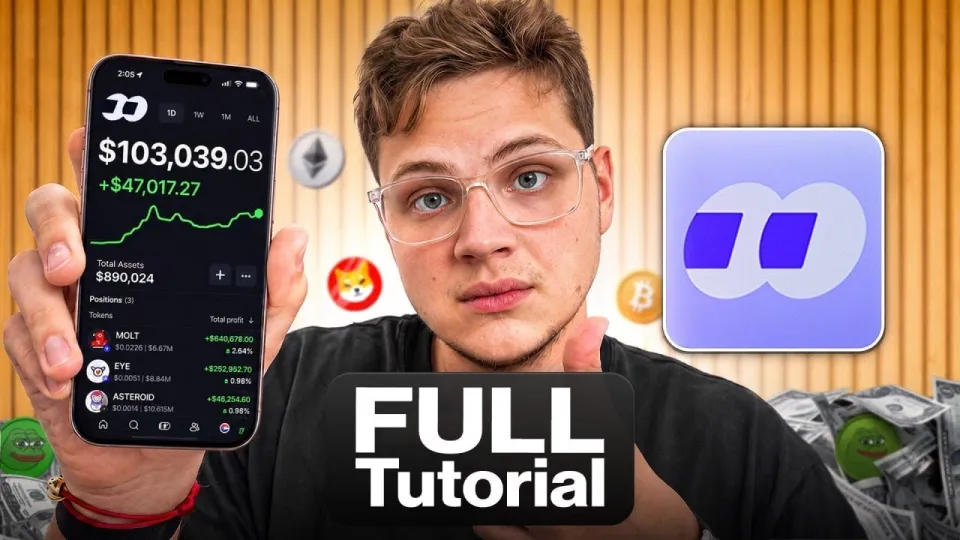
Video: How To Make Money Trading Memecoins (fomo app tutorial)
You can order the same kind of articles for your own video to boost it on YouTube and Google. Just message the Telegram bot @sat_sit_bot. Articles with your video embedded are written and posted by the bot itself — on popular topical sites (no ads). Your first 50 articles are free.
· based on the channel Orangie Web3
Meme coin trading is the practice of buying and selling tokens whose price is driven almost entirely by narrative, liquidity and attention rather than revenue or fundamentals — and it is profitable only when position sizing and exit rules are fixed before the entry. Tools such as the fomo trading app, a Solana-focused interface with copy trading and one-click swaps, shorten the distance between spotting a token and buying it, but they do not remove the underlying risk. The mechanics are learnable; the discipline is what separates a repeatable process from a lottery ticket.
What a meme coin actually is and why prices move so fast
A meme coin is a token with no product behind it, where price is a function of liquidity depth and the flow of new buyers. On Solana, launching a token costs a few dollars and takes minutes, so thousands appear weekly and most lose 90% or more of their peak value within days. Price moves are violent because liquidity is thin: a few thousand dollars of buys can double a chart, and the same amount of selling can erase it.
Three forces drive these moves:
- Attention — a viral post, a meme format, a known trader posting a wallet screenshot.
- Liquidity — how much capital sits in the pool; thin pools amplify both directions.
- Holder distribution — if one wallet holds 20% of supply, that wallet is the exit liquidity risk.
The practical consequence: you are not analysing a business, you are estimating whether the next wave of buyers arrives before the current holders leave. That is a timing and risk problem, not a valuation problem.
How the fomo app fits into a meme coin workflow
The fomo app is a Solana trading front end that bundles token discovery, swaps and copy trading into one screen, which removes the friction of juggling a wallet, a chart and a scanner. Registration through the referral link at https://fomo.family/r/orangie gives access to the platform; the workflow itself looks like this:
- Fund a dedicated wallet with an amount you are willing to lose entirely — not your main holdings.
- Scan new pairs and filter by liquidity, age and holder count before looking at the chart.
- Check the contract for mint authority, freeze authority and top-holder concentration.
- Enter with a fixed size, typically 1–3% of your trading capital per position.
- Set an exit before buying — a target, a stop, or a time limit, whichever hits first.
Copy trading is the feature that attracts beginners and the one that deserves the most caution. Mirroring a wallet means your entry executes after theirs, at a worse price, with no insight into their thesis or their hedge.
The copy trading trap: why mirroring big wallets usually loses
Copy trading fails for meme coins because the information you are reacting to is already stale by the time it is public. A large trader who plans to buy a token has an incentive to accumulate on a separate, unlinked wallet first; when the buy on the visible main wallet lands, the price is already up and the crowd provides the exit liquidity. You see the entry, not the plan, the size relative to their portfolio, or the sell order sitting above you.
A workable middle ground is to treat copy trading as a watchlist generator rather than an execution signal. When a tracked wallet buys, log the token, check the liquidity and holder distribution yourself, and decide independently. If you cannot explain in one sentence why the token should attract more buyers, skip it — the copy was the entire thesis, and that is not a thesis.
Position sizing and exits: the part that decides the outcome
Survival in meme coin trading comes from sizing, because the hit rate on new launches is low and a single oversized loss can erase twenty correct calls. A simple framework that holds up in practice:
- Cap each position at 1–3% of trading capital. Ten consecutive losses then cost 10–30%, not the account.
- Take partial profit on the way up. Selling half at 2x converts a gamble into a free position.
- Use a hard stop or a time stop. If the thesis was attention and attention is gone, the position is gone.
- Never average down into a token whose liquidity is draining.
- Track every trade with entry, exit and reason, so the sample tells you which mistakes repeat.
Beginners often fixate on finding a 100x and skip the arithmetic: at 1% position size, a 100x adds 100% to the portfolio, but at 20% size a single rug removes a fifth of it. The asymmetry only works in your favour when the downside per bet is small.
Common questions from new meme coin traders
Most doubts beginners raise are about trust, timing and recovery, and each has a concrete answer. Wallet drainers and fake tokens are the dominant fear, and the defence is procedural: separate wallets, revoked approvals, and never signing transactions from links in direct messages. The second recurring theme is timing — whether it is too late to enter after a coin has already run. The honest answer is that late entries with no defined exit are how most losses happen; if the setup requires chasing, it is not a setup.
The third theme is recovery after a loss. A drained wallet or a bad streak is a signal to reduce size, not to increase it to win it back. Trading with a small reloaded balance and treating the first weeks as tuition is a healthier pattern than trying to recover a large loss in one trade. Finally, many ask whether tools can replace judgement: they cannot. A faster interface improves execution, not edge.
Useful links
- fomo trading platform (registration via referral): https://fomo.family/r/orangie
- Orangie Web3 Discord community: https://discord.gg/memecoins
- Instagram: https://www.instagram.com/orangieyt/
Bottom line
Meme coin trading rewards process over prediction: a dedicated wallet, a hard cap of a few percent per position, an exit defined before entry, and scepticism toward copy trading as a signal. Tools like the fomo app shorten execution and make discovery easier, but the edge comes from refusing oversized bets and from treating every loss as data. The Orangie Web3 channel walks through the platform step by step, which makes it a useful starting point for anyone who wants to see the interface before risking capital. Start with the fomo registration link, fund only what you can lose, and paper-trade the first ten ideas before putting real size behind them.
Key takeaways
- Meme coins are high-volatility tokens driven by narrative and liquidity, not by cash flow or fundamentals.
- The fomo app (fomo.family) is a Solana-focused trading interface with copy trading and one-click swaps.
- Copy trading lags: large traders often pre-buy on a separate wallet before their main-wallet entry becomes visible.
- Position sizing matters more than coin selection: a 1–3% portfolio cap per bet keeps a losing streak survivable.
- Price alerts are the most requested missing feature among viewers of the Orangie Web3 walkthrough.
Questions & answers
Is meme coin trading profitable for beginners?
It can be, but the base rate is unfavourable: most new tokens lose the majority of their value, so profitability depends on position sizing and exits rather than on picking winners. Beginners who cap each bet at 1–3% of capital and take partial profits survive long enough to learn. Those who size large on a single idea usually do not.
Why does copy trading on meme coins often lose money?
Because the trade you copy has already happened. Large traders can accumulate on a separate wallet before their visible main-wallet buy, so copiers enter at a higher price and become exit liquidity. Copy trading is more useful as a watchlist of tokens to research than as an execution signal.
What should I check before buying a new Solana meme coin?
Check liquidity depth, holder concentration, and whether mint or freeze authority is still active, then look at the chart. A token where a few wallets hold a large share of supply carries immediate dump risk. If you cannot state in one sentence why more buyers should arrive, skip the trade.
How much capital should I put into a single meme coin?
A common rule is 1–3% of your trading capital per position, so a losing streak costs a fraction of the account rather than most of it. The exact number depends on how many positions you hold at once, but the cap should be set before entry and never raised to recover a loss.
Source: How To Make Money Trading Memecoins (fomo app tutorial) · Markdown version